
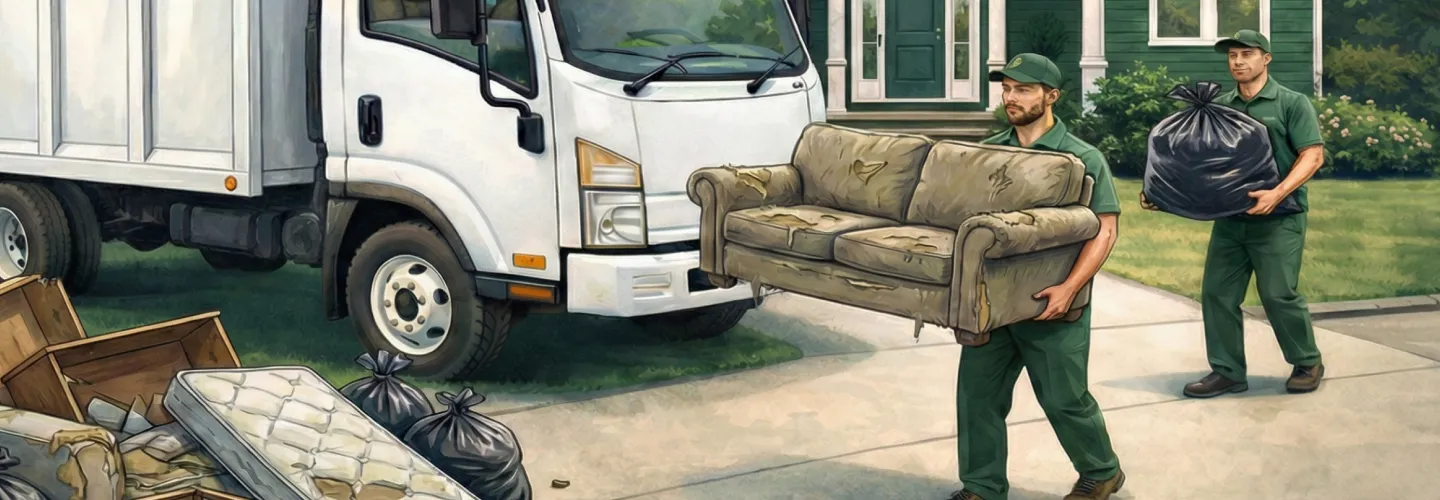
Snellville Scrap Metal Removal Services
Choose our Scrap Metal Removal for hassle-free, eco-friendly service that clears your space quickly while ensuring responsible recycling and top-notch customer care.
Get a Free QuoteOur Snellville Junk Removal Services
Scrap Metal Removal in Snellville, GA – Local Service Guide
Scrap metal removal in Snellville, GA is essential for keeping homes and businesses clutter-free and compliant with local regulations. In neighborhoods like Brookwood Village and Summit Chase, residents often need removal services during spring cleanouts, appliance upgrades, or after storms. Items such as old grills, washers, and metal furniture are common, and options include recycling, donation, or proper disposal. Access and weather can affect scheduling, especially for large or heavy items. For residential spaces like garages and basements, seasonal cleanouts and storm debris are frequent drivers, with local schedules influenced by city pickup and property factors like tree coverage or flood-prone areas.
Commercial clients in areas like Scenic Highway and Oak Road face unique needs—restaurants and offices may require discreet, after-hours pickups to minimize disruption, while construction sites generate high volumes needing coordinated removal. Specialty projects, such as estate cleanouts or hoarding situations, demand careful planning and coordination, especially when handling large volumes or hazardous materials. For guidance on local disposal rules and recycling options, visit the Snellville Public Works Department.
Key Considerations for Scrap Metal Removal in Snellville
- Timing cleanouts with seasonal events or property transitions
- Checking for required permits or city guidelines
- Choosing proper disposal or recycling channels
- Ensuring easy access for removal vehicles
- Estimating volume and category of items
- Coordinating with local schedules and weather conditions
Benefits of Scrap Metal Removal in Snellville
Eco-Friendly Disposal
Fast and Reliable Service
Free Up Valuable Space
Safe Scrap Metal Handling
Competitive Pricing
Licensed and Insured Team
Coordinating Scrap Metal Disposal with Snellville's Public Works and Gwinnett County Programs
Snellville residents and contractors generating scrap metal must coordinate disposal through both municipal and county-level waste management channels. The City of Snellville operates within Gwinnett County's broader solid waste infrastructure, which governs transfer station access and material acceptance policies. Scrap metal from residential cleanouts, renovation projects, and appliance replacements requires proper sorting before transport to authorized facilities.
Key coordination steps include:
- Contact Snellville Public Works to confirm current sanitation schedules and any bulk metal pickup availability
- Verify accepted metals — ferrous metals (steel, iron, cast iron) and non-ferrous metals (copper, aluminum, brass) are typically separated at processing facilities
- Obtain required documentation for commercial haulers transporting scrap metal through city limits
- Schedule pickup or drop-off in advance, as metal items are not accepted through standard curbside collection
- Confirm weight and volume limits before loading vehicles for transport to county facilities
Snellville Public Works Department
2342 Oak Road, Snellville, GA 30078
Phone: (770) 985-3513
Official Website: Snellville Public Works Department
Residents should retain receipts from authorized scrap yards or recycling facilities as proof of proper disposal, particularly for renovation or demolition projects subject to permit requirements.
Georgia's Solid Waste Management Act and Scrap Metal Recycling Compliance
Georgia regulates scrap metal disposal under the Georgia Comprehensive Solid Waste Management Act (O.C.G.A. § 12-8-20) administered by the Georgia Environmental Protection Division. This legislation establishes standards for the collection, transportation, and processing of solid waste, including scrap metals generated from residential and commercial sources. Snellville property owners must ensure that scrap metal removal activities comply with state-level requirements.
Important regulatory considerations include:
- Scrap metal dealers in Georgia must maintain a valid license and comply with record-keeping requirements under O.C.G.A. § 10-1-350, including identification verification for sellers
- Ferrous and non-ferrous metals must be transported in covered or secured vehicles to prevent road debris and stormwater contamination
- Hazardous components such as mercury switches in older appliances, lead solder, or PCB-containing transformers must be removed and handled separately as hazardous waste
- Illegal dumping of scrap metal carries penalties including fines up to $25,000 per day per violation under Georgia law
- Appliance refrigerants must be recovered by an EPA Section 608-certified technician before metal recycling
Georgia Environmental Protection Division
2 Martin Luther King Jr. Drive SE, Suite 1456, Atlanta, GA 30334
Phone: (404) 656-4713
Official Website: Georgia Environmental Protection Division
Snellville Code Enforcement Standards for Scrap Metal Storage and Property Maintenance
The City of Snellville enforces property maintenance codes that directly affect how scrap metal may be stored, accumulated, and removed from residential and commercial properties. The Quality of Life and Code Enforcement division monitors properties for violations related to outdoor metal accumulation, abandoned vehicles, and improperly stored construction debris containing metal components.
Property owners should be aware of the following requirements:
- Outdoor storage of scrap metal on residential properties may constitute a code violation if visible from the public right-of-way or neighboring properties
- Abandoned vehicles and vehicle parts containing recoverable metals must be removed within the timeframe specified in the city's notice of violation
- Construction and renovation debris with metal components (rebar, flashing, ductwork, piping) must not remain on-site beyond the active permit period
- Commercial properties accumulating scrap metal must maintain proper screening and enclosure per zoning requirements
- Complaints from neighbors regarding metal accumulation may trigger inspection and enforcement action with associated fines
Snellville Quality of Life & Code Enforcement
2342 Oak Road, Snellville, GA 30078
Phone: (770) 985-3513
Official Website: Snellville Quality of Life & Code Enforcement
Residents planning large-scale scrap metal removal from properties with active code violations should contact Code Enforcement to confirm compliance timelines and documentation requirements before scheduling removal services.
Safety Protocols and Hazardous Material Handling for Scrap Metal Removal in Snellville
Scrap metal removal presents specific safety hazards that require proper planning, protective equipment, and awareness of potentially hazardous materials embedded within metal items. Properties built before 1978 in Snellville may contain lead-painted metal surfaces, and older HVAC systems or industrial equipment may include asbestos-containing gaskets or insulation attached to metal components.
Essential safety considerations include:
- Lead-painted metals — metal railings, window frames, and structural steel from pre-1978 buildings require lead-safe work practices under the EPA Renovation, Repair, and Painting Rule
- Sharp edges and heavy lifting — cut metal, sheet metal, and structural steel require cut-resistant gloves, steel-toed boots, and proper lifting equipment to prevent lacerations and musculoskeletal injuries
- Pressurized containers — propane tanks, compressed gas cylinders, and aerosol cans mixed with scrap metal must be separated and handled through hazardous waste channels
- Mercury-containing switches — older thermostats, chest freezers, and trunk lighting may contain mercury switches that must be removed before metal recycling
- Electrical components — wiring, transformers, and electrical panels should be de-energized and verified by a licensed electrician before removal
Gwinnett County Fire & Emergency Services
818 Crogan Street, Lawrenceville, GA 30046
Phone: (678) 518-4800
Official Website: Gwinnett County Fire & Emergency Services
Scrap Metal Sorting, Separation, and Recycling Requirements for Snellville Residents
Proper sorting and separation of scrap metals significantly increases material recovery value and ensures compliance with recycling facility acceptance standards. Gwinnett County and surrounding scrap metal processors require materials to be separated by type before delivery, and contaminated loads may be rejected or subject to reduced pricing and additional processing fees.
Recommended sorting categories include:
- Ferrous metals (magnetic) — steel appliances, iron pipes, rebar, steel framing, automotive parts, and cast iron fixtures
- Non-ferrous metals (non-magnetic, higher value) — copper wiring and piping, aluminum siding and gutters, brass fixtures and fittings, stainless steel sinks
- Mixed electronics metals — circuit boards, computer housings, and server racks should be directed to certified e-waste recyclers rather than general scrap yards
- Appliance metals — refrigerators, washers, dryers, and HVAC units require refrigerant recovery and removal of hazardous components before metal recycling
- Automotive metals — catalytic converters, engine blocks, and body panels; note that Georgia law requires proof of ownership or authorization for catalytic converter sales
Residents should remove non-metal attachments such as wood, plastic, rubber, and fabric from metal items before transport. Clean, properly sorted scrap metal commands higher recycling value and supports Gwinnett County's landfill diversion objectives.
What Neighborhoods Do We Serve Throughout Snellville, GA?
- Snellville Towne Center Area: The commercial core features retail and office properties that generate scrap metal from tenant buildouts, signage replacement, and HVAC system upgrades. Loading zone coordination and business-hour scheduling are important considerations for metal removal from this district.
- Brookwood Estates: This established single-family neighborhood contains homes built in the 1980s and 1990s where aging metal fencing, gutters, and outdoor structures frequently require removal. Wide residential streets and driveway access accommodate standard removal vehicles.
- South Gwinnett / Highway 78 Corridor: Mixed commercial and light industrial properties along this corridor produce higher volumes of structural steel, shelving, and equipment scrap. Properties may require coordination with the Snellville Planning & Development Department for demolition-related metal removal permits.
- Scenic Highway Area: Older residential properties along this corridor may contain pre-1978 construction materials with lead-painted metal components requiring special handling protocols during removal.
- Stone Ridge and Windscape: These suburban subdivisions feature HOA-governed communities where advance approval may be needed for staging scrap metal removal equipment. Residents should verify community covenants regarding temporary storage of metal debris on driveways or front yards.
- Lenora Park Vicinity: Residential neighborhoods near Lenora Park include a mix of single-family homes and townhome communities. Townhome properties may present limited staging areas for scrap metal collection, requiring coordination with property management for shared access points.