
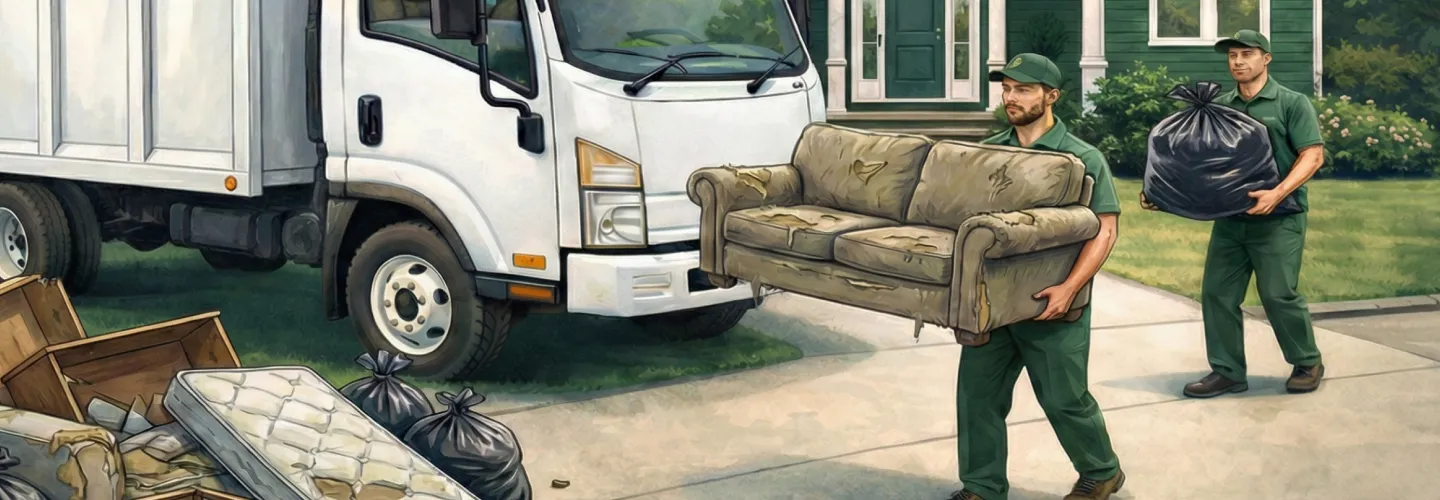
Snellville Restaurants Junk Removal Services
Choose our Restaurants Junk Removal for prompt, discreet, and eco-friendly service that keeps your business clean, compliant, and welcoming for every guest.
Get a Free QuoteOur Snellville Junk Removal Services
Restaurants Junk Removal in Snellville, GA – Local Service Guide
Restaurants in Snellville, from the bustling Scenic Highway corridor to the eateries near Oak Road and the Shoppes at Webb Gin, face unique junk removal needs. Seasonal renovations, equipment upgrades, and health code compliance often trigger the need for swift, discreet removal of kitchen appliances, furniture, and bulk waste. Local regulations require proper disposal or recycling, and many restaurants coordinate pickups to avoid disrupting business hours. In neighborhoods like Brookwood Village, access and parking can affect logistics, especially during peak dining times or inclement weather. For larger volumes or specialty items, such as old refrigeration units or bulk seating, planning ahead ensures compliance and minimizes downtime. Snellville’s commercial districts often require coordination with property managers and adherence to city guidelines for waste handling. For more on local rules and resources, visit the Snellville Public Works Department.
Key Considerations for Restaurants Junk Removal in Snellville
- Timing pickups to avoid peak service hours
- Securing necessary permits for large disposals
- Using approved disposal and recycling channels
- Navigating access in busy commercial areas
- Managing high-volume or specialty waste
- Coordinating with property managers and city requirements
Benefits of Restaurants Junk Removal in Snellville
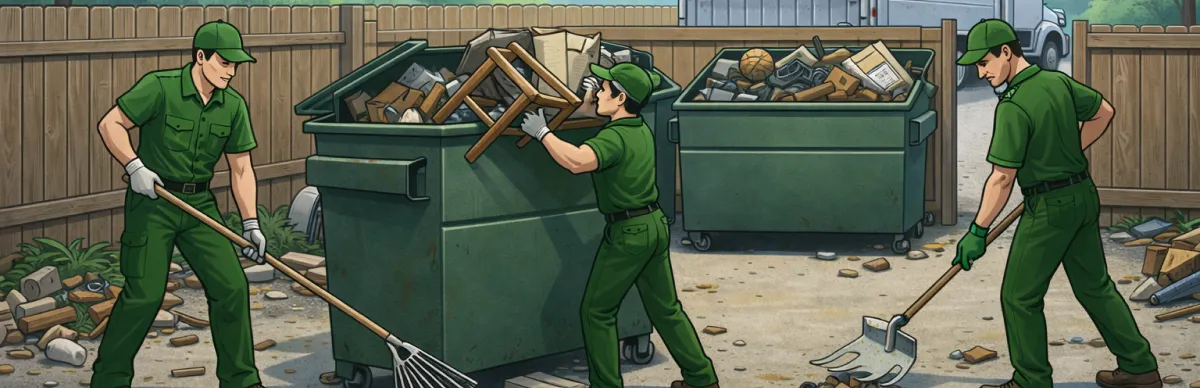
Fast and Reliable Service
Eco-Friendly Disposal Solutions
Flexible Scheduling Options
Licensed and Insured Team
Competitive Pricing
Comprehensive Junk Removal
Coordinating Restaurant Equipment Disposal with Snellville's Public Works and Waste Management Programs
Restaurant junk removal in Snellville requires careful coordination with municipal waste management services, particularly when disposing of large commercial kitchen equipment, furniture, and fixtures. Snellville operates within Gwinnett County's solid waste infrastructure, and restaurant owners must ensure that all disposal activities comply with local ordinances governing commercial waste. Key considerations for restaurant cleanouts include:
- Commercial waste classification — restaurant debris including booths, counters, walk-in cooler panels, and grease traps must be categorized correctly for disposal
- Scheduling requirements — coordinate removal during non-peak hours to minimize disruption to neighboring businesses and comply with local noise ordinances
- Hauler licensing — any waste hauler operating within Snellville must maintain proper commercial licensing and insurance
- Volume limitations — large-scale restaurant cleanouts may exceed standard commercial pickup capacity, requiring special arrangements
Restaurant owners should contact the Snellville Public Works Department to confirm current commercial waste disposal requirements and approved hauler lists before initiating any removal project.
Snellville Public Works Department
2342 Oak Road, Snellville, GA 30078
Phone: (770) 985-3513
Official Website: Snellville Public Works Department
Snellville Code Enforcement Standards for Restaurant Renovation and Cleanout Debris
When a restaurant undergoes renovation, closure, or ownership transition in Snellville, the resulting debris must be managed in accordance with the city's code enforcement standards. The Snellville Quality of Life and Code Enforcement division monitors property maintenance and ensures that commercial properties remain compliant during and after junk removal activities. Restaurant operators should be aware of the following requirements:
- Debris containment — all waste materials must be contained on the property and not allowed to accumulate on sidewalks, parking lots, or adjacent parcels
- Timeframe compliance — removal of debris from closed or renovating restaurants must occur within the timeframe specified by code enforcement notices
- Building permits — interior demolition or structural modifications associated with restaurant cleanouts may require permits from the Snellville Planning and Development Department
- Signage and barriers — active removal sites must display appropriate safety signage and maintain barriers to prevent public access to hazardous areas
- Illegal dumping penalties — disposing of restaurant waste in unauthorized locations, including vacant lots or storm drains, constitutes a code violation subject to fines
Snellville Quality of Life & Code Enforcement
2342 Oak Road, Snellville, GA 30078
Phone: (770) 985-3513
Official Website: Snellville Quality of Life & Code Enforcement
Georgia's Solid Waste Management Act and Restaurant Disposal Compliance
Restaurant junk removal in Snellville must comply with the Georgia Comprehensive Solid Waste Management Act (O.C.G.A. § 12-8-20) administered by the Georgia Environmental Protection Division (GA EPD). This state law establishes the regulatory framework for solid waste handling, transportation, and disposal that applies to all commercial operations, including restaurants. Critical compliance points include:
- Manifest and tracking requirements — commercial waste haulers transporting restaurant debris must maintain proper documentation of waste origin, type, and destination facility
- Permitted disposal facilities — all restaurant waste must be delivered to GA EPD-permitted solid waste handling facilities; disposal at unpermitted sites is a violation of state law
- Hazardous material separation — restaurant cleanouts frequently involve chemicals such as cleaning solvents, pest control products, and refrigerants that are classified as hazardous waste under Resource Conservation and Recovery Act (RCRA) and must be separated from general waste streams
- Grease trap waste — used cooking oil and grease trap contents are regulated separately and must be collected by licensed grease haulers
Georgia Environmental Protection Division
2 Martin Luther King Jr. Drive SE, Suite 1456, Atlanta, GA 30334
Phone: (404) 656-4713
Official Website: Georgia Environmental Protection Division
Hazardous Material Handling and Refrigerant Recovery for Snellville Restaurant Equipment
Restaurant junk removal frequently involves equipment and materials that require specialized handling due to environmental and safety regulations. Commercial kitchens in Snellville commonly contain refrigeration units, freezers, and HVAC systems that use regulated refrigerants. Before any such equipment can be disposed of or recycled, federal law under EPA Section 608 regulations mandates that refrigerants be recovered by a certified technician. Additional hazardous material considerations for restaurant cleanouts include:
- Refrigerant recovery — walk-in coolers, reach-in refrigerators, ice machines, and freezers all require certified refrigerant extraction prior to disposal
- Mercury-containing devices — older thermostats and fluorescent lighting fixtures common in restaurant kitchens contain mercury and must be handled as universal waste
- Cleaning chemicals — commercial-grade degreasers, sanitizers, and oven cleaners must not be disposed of in standard waste streams; contact Gwinnett County for household hazardous waste collection events
- Fire suppression systems — commercial kitchen hood suppression systems contain chemical agents that require professional decommissioning
- Lead paint concerns — restaurants in buildings constructed before 1978 may contain lead-based paint; the EPA Renovation, Repair, and Painting Rule requires lead-safe work practices during demolition
Gwinnett County Fire & Emergency Services
818 Buford Highway, Lawrenceville, GA 30046
Phone: (678) 518-4800
Official Website: Gwinnett County Fire & Emergency Services
Recycling and Material Recovery Options for Restaurant Fixtures in Snellville
Snellville restaurant owners undertaking junk removal should prioritize recycling and material recovery to reduce landfill impact and comply with Georgia's waste reduction goals. Restaurant cleanouts generate significant volumes of recyclable materials, including stainless steel equipment, aluminum fixtures, copper wiring, and wood furnishings. Proper sorting and separation at the point of removal maximizes diversion from landfills. Key recycling considerations include:
- Scrap metal recovery — stainless steel prep tables, shelving units, exhaust hoods, and sinks have substantial scrap value and should be directed to licensed metal recyclers in the Gwinnett County area
- Electronics recycling — point-of-sale systems, monitors, security cameras, and other electronic equipment should be recycled through certified e-waste processors rather than disposed of in general waste
- Furniture and fixture donation — usable booths, tables, chairs, and decorative items may be accepted by local charitable organizations; donation receipts provide tax documentation for business owners
- Cooking oil recycling — used fryer oil can be collected by biodiesel processors or rendering companies rather than disposed of as waste
- Cardboard and packaging — large volumes of cardboard from equipment packaging should be separated and directed to recycling facilities
Gwinnett County operates recycling drop-off centers that accept many of these materials. Contact Gwinnett County Water Resources for information on stormwater compliance when cleaning grease-contaminated areas during restaurant removal projects.
What Neighborhoods Do We Serve Throughout Snellville, GA?
- Snellville Town Center / Towne Park: This mixed-use commercial district contains numerous restaurant locations along major corridors. Loading zone coordination and off-peak scheduling are essential due to high pedestrian and vehicle traffic in the area.
- South Snellville (Highway 78 Corridor): A heavily commercialized strip with standalone restaurants and strip mall food establishments. Wide parking lots generally allow straightforward equipment removal access, though coordination with neighboring tenants is advisable.
- Scenic Highway Area: Older commercial buildings along this corridor may present narrow rear access points and aging infrastructure. Restaurants in pre-1978 structures should be assessed for lead paint and asbestos before interior demolition.
- Lenora Park / North Snellville: Primarily residential with scattered neighborhood restaurants and small eateries. Residential proximity requires adherence to Snellville noise ordinances during removal operations.
- Stone Mountain Highway Commercial District: High-traffic commercial zone with diverse restaurant types including fast-food chains and independent establishments. Service vehicle staging may require coordination with property management due to shared parking facilities.
- Pate Road / Eastern Snellville: A developing area with newer restaurant construction and modern commercial plazas. Wider access roads and updated building codes generally simplify equipment removal logistics in this section of the city.